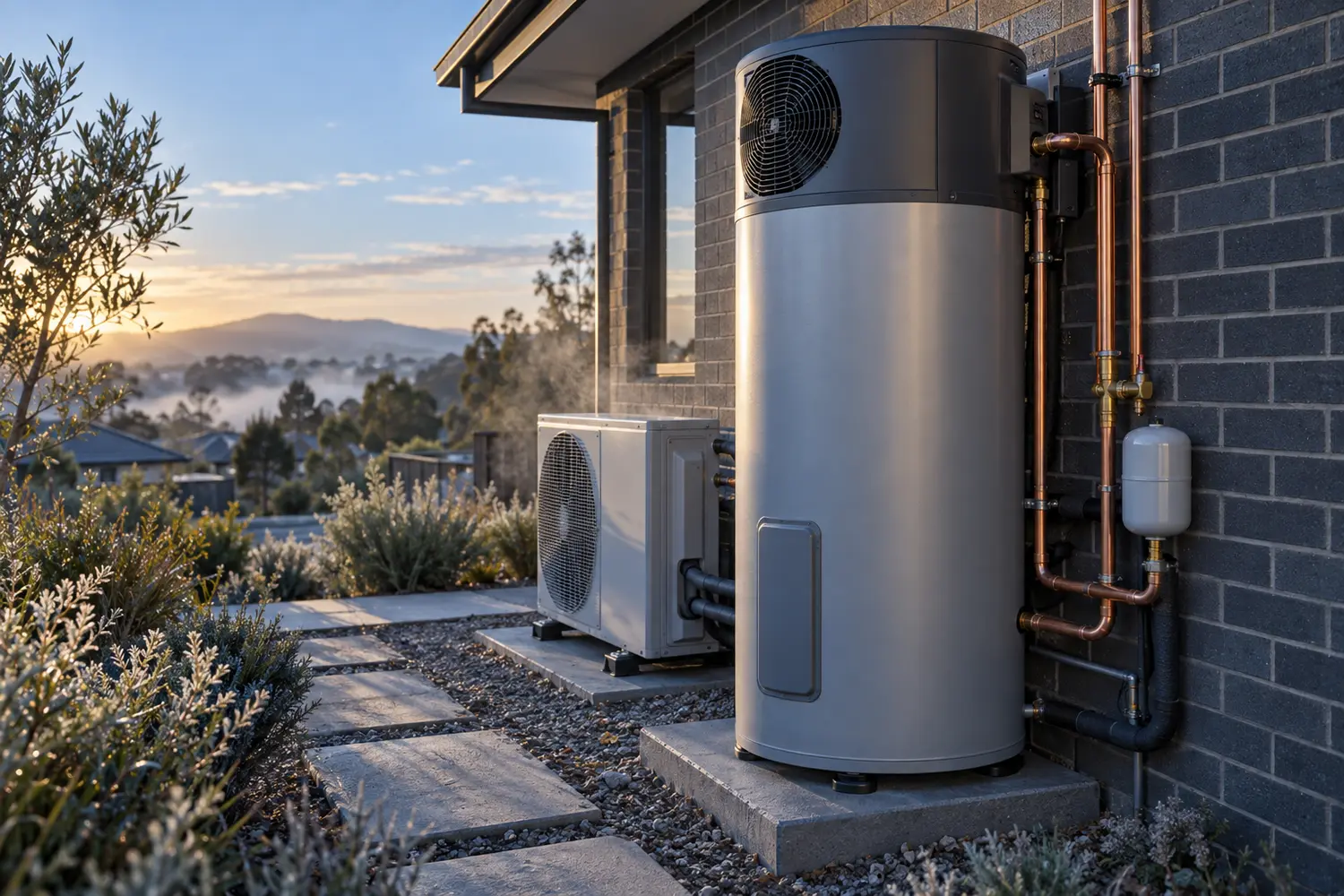
A heat pump uses electricity to move heat from the surrounding air into stored water. Its suitability depends on more than the efficiency figure shown in a brochure.
Cold mornings and system selection
Albury–Wodonga experiences cold winter conditions. Ask how the proposed model performs at lower ambient temperatures, whether it has a boost function and how recovery changes across the seasons.
Placement and noise
The unit needs suitable airflow and clearance. Discuss proximity to bedrooms, neighbours, fences and enclosed spaces. The position should also allow safe servicing and drainage.
Match capacity to the household
Household size, shower patterns and peak demand influence storage capacity. A system that is too small may rely heavily on boosting; one that is unnecessarily large may cost more without adding practical value.
How to judge a heat-pump recommendation
Ask for the proposed model and tank capacity, then request an explanation of how they match peak household demand. Recovery performance matters alongside capacity, particularly when several showers occur close together. Ask when the electric boost operates and whether normal settings are likely to rely on it during winter or unusually heavy use.
Placement should be assessed rather than selected only for convenience. The unit needs airflow, drainage, service clearance and a position that manages operating sound responsibly. Pipe distance can also affect installation work and heat loss. Photographs help with an initial discussion, but final siting should be confirmed for the actual property.
Running cost and rebate claims need context
Efficiency figures do not produce the same bill saving in every home. Water use, tariffs, climate, settings, installation and rooftop solar all influence the result. Ask which assumptions support any estimate. If an incentive is included, the quote should identify the relevant program, eligible product and price before and after the discount.
A complete heat-pump quote should clarify
- Exact model, capacity and cold-weather operating information
- Proposed position, clearance, drainage and sound considerations
- Electrical and plumbing alterations
- Removal and disposal of the existing system
- Commissioning, settings and customer instructions
- Product and workmanship warranties