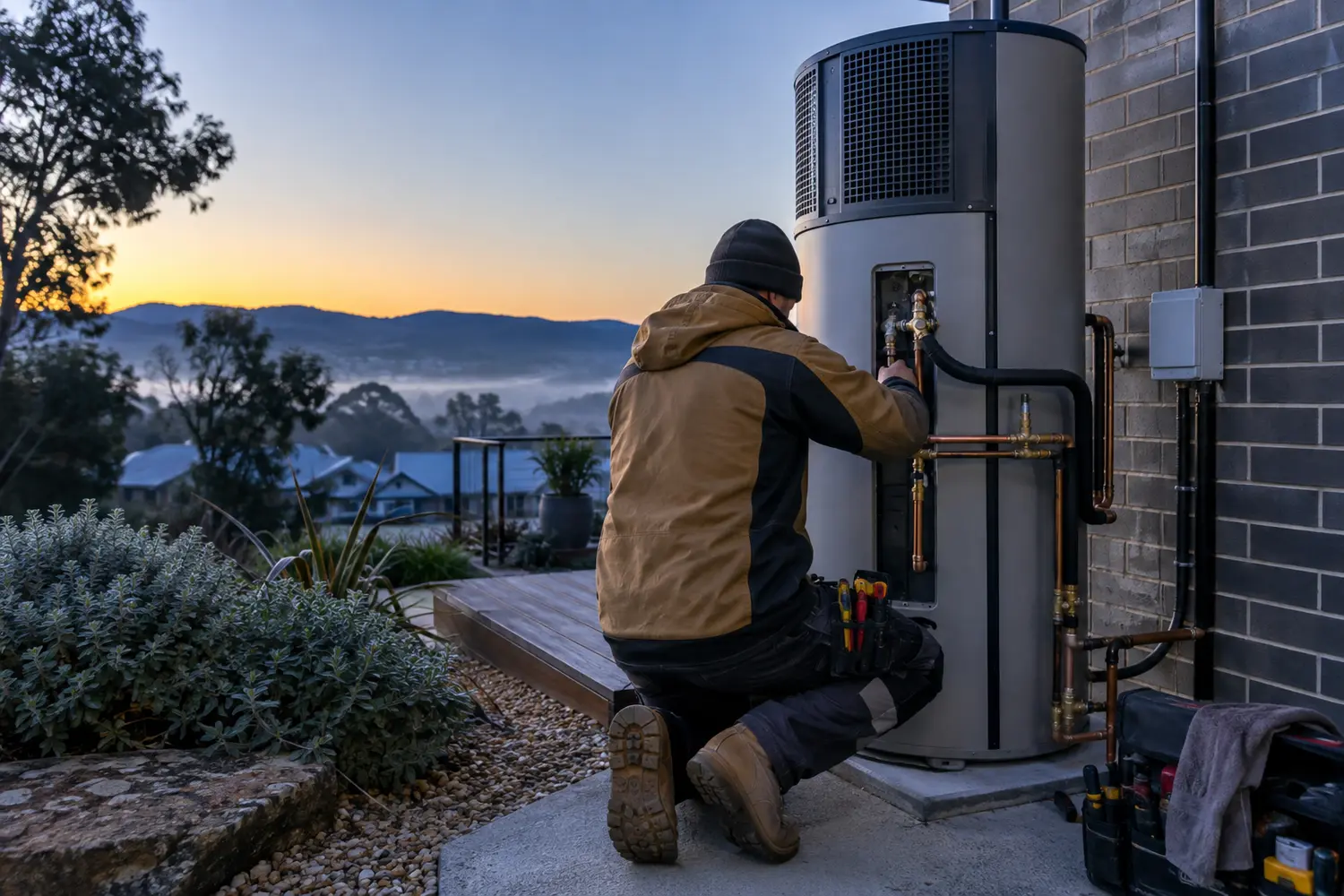
A repair can be sensible when the fault is isolated and the wider system remains sound. Replacement becomes more likely when the tank itself has failed, faults repeat or the unit no longer meets household needs.
Consider the source of the problem
A faulty valve, thermostat or connection may be repairable. Corrosion, a leaking storage cylinder or multiple ageing components can change the economics. An assessment is needed before assuming either outcome.
Age is useful—but not the only factor
System age helps frame the decision, but maintenance history, water conditions, installation quality and the specific fault also matter. Avoid replacing solely because of age, or repairing solely because the initial invoice looks lower.
Compare the next several years
- Immediate repair cost and likely remaining life
- Risk of another interruption or leak
- Current household demand
- Potential running-cost differences
- Installation work required for another system type
Get the scope in writing
A replacement quote should clarify removal, valves, pipework, electrical or gas work, access, commissioning and applicable warranties. That makes competing quotes easier to compare.